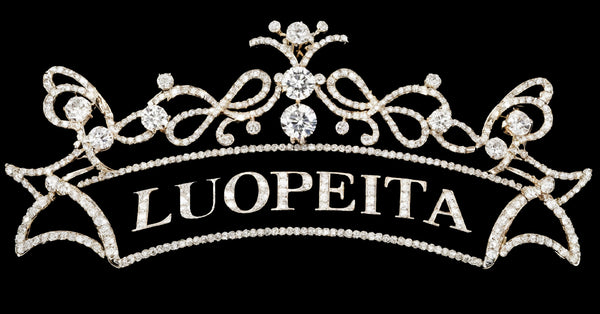
How to Convert a Logo into a Rhinestone Layout for Clothing
How to Convert a Logo into a Rhinestone Layout for Clothing
Introduction
More fashion brands than ever are incorporating rhinestone logo designs into their apparel collections. From luxury streetwear and oversized hoodies to sportswear, denim jackets, and concert merchandise, rhinestone logos help brands create products that stand out with premium sparkle and strong visual identity.
However, one of the biggest misconceptions among first-time buyers is believing that a logo can simply be sent to a factory and immediately applied as rhinestones.
In reality, a logo must first be converted into a specialized rhinestone layout before production can begin. This conversion process involves engineering, artwork optimization, stone selection, spacing calculations, and manufacturing feasibility analysis.
At Luopeita Clothes Factory, we specialize in OEM and ODM rhinestone apparel manufacturing. Every year, we help fashion brands, wholesalers, and private-label businesses convert hundreds of logos into production-ready rhinestone artwork.
This guide explains the complete process from logo artwork to finished rhinestone garments.

What Is a Rhinestone Logo Design?
A rhinestone logo design is a logo recreated using precisely positioned rhinestones instead of traditional printing or embroidery.
Rather than using ink or thread, the artwork is built from hundreds—or even thousands—of individual rhinestones arranged to create:
- Brand logos
- Company names
- Initials
- Monograms
- Mascots
- Sports logos
- Luxury-inspired graphics
- Gothic typography
- Y2K graphics
- Music merchandise artwork
Each rhinestone acts like a "pixel," forming the overall image.
Why Can't a Vector Logo Be Used Directly?
Many customers provide:
- AI files
- EPS files
- SVG files
- PDF artwork
These files are excellent starting points, but they are not production-ready.
Unlike printing, rhinestones are physical objects with fixed diameters. Designers must determine:
- Which parts of the logo can use rhinestones
- Appropriate stone sizes
- Stone spacing
- Curves and corners
- Production limitations
Therefore, every logo must be engineered specifically for rhinestone application.
Step 1: Evaluate Whether the Logo Is Suitable for Rhinestones
The first step is assessing whether the original artwork can be successfully translated into rhinestones.
Key factors include:
Logo Complexity
Simple logos convert more easily than highly detailed illustrations.
Good examples include:
- Text logos
- Lettermarks
- Monograms
- Geometric symbols
- Minimalist graphics
Highly detailed artwork may require simplification.
Minimum Line Thickness
Very thin lines cannot accommodate rhinestones.
As a general guideline:
- Thick lines = Excellent
- Medium lines = Good
- Extremely thin lines = May require redesign
Small Details
Tiny decorative elements may disappear when converted.
Professional designers often merge or enlarge small features.
Step 2: Choose the Right Rhinestone Sizes
One of the most important steps is selecting stone sizes.
Common industry sizes include:
| Stone Size | Diameter | Typical Use |
|---|---|---|
| SS6 | 2 mm | Fine outlines |
| SS8 | 2.4 mm | Small lettering |
| SS10 | 2.8 mm | Standard logos |
| SS16 | 4 mm | Large graphics |
| SS20 | 4.8 mm | Bold highlights |
| SS30 | 6.4 mm | Statement designs |
Professional layouts often combine multiple sizes to create depth and improve readability.
Step 3: Decide on Rhinestone Material
Different materials create different visual effects.
Glass Rhinestones
Advantages:
- Maximum sparkle
- Premium appearance
- Better clarity
- Luxury positioning
- Excellent durability
Ideal for:
- Premium fashion
- Luxury streetwear
- High-end private labels
Acrylic Rhinestones
Advantages:
- Lower cost
- Lightweight
- Wide color selection
Suitable for:
- Promotional apparel
- Budget collections
- Large wholesale orders
Step 4: Select Rhinestone Colors
Color planning is just as important as logo design.
Popular options include:
- Crystal Clear
- Black Diamond
- Jet Black
- Silver
- Gold
- Aurora Borealis (AB)
- Rose Gold
- Sapphire Blue
- Emerald Green
- Ruby Red
Some logos use a single color, while others combine multiple stone colors to recreate gradients or branding elements.
Step 5: Convert Artwork into a Rhinestone Layout
This is the core engineering stage.
Specialized rhinestone design software is used to:
- Replace vector lines with stone positions
- Calculate spacing
- Optimize curves
- Maintain logo proportions
- Prevent overlapping stones
- Improve production efficiency
The output is a production-ready rhinestone layout rather than a standard graphic file.
Step 6: Optimize Stone Spacing
Proper spacing is essential.
If stones are too close:
- Heat transfer becomes unstable
- Stones may overlap
- Adhesive performance decreases
If stones are too far apart:
- The logo loses definition
- Gaps become visible
- Overall quality decreases
Experienced engineers adjust spacing according to:
- Stone size
- Fabric type
- Logo dimensions
- Production method
Step 7: Consider Fabric Compatibility
Not every fabric behaves the same during rhinestone application.
Excellent choices include:
- Cotton Jersey
- Heavyweight Cotton
- French Terry
- Fleece
- Denim
- Cotton Blends
Stretch fabrics require additional engineering because excessive stretching may reduce rhinestone durability.
Step 8: Produce a Rhinestone Transfer Template
Once the layout is approved, a transfer template is created.
This template ensures every rhinestone is placed accurately during production.
It includes:
- Stone coordinates
- Placement guides
- Carrier film
- Heat-transfer positioning
Creating this template is one of the main reasons sample development involves a one-time engineering fee.
Step 9: Sample Production
Before mass production, a sample is manufactured to verify:
- Logo appearance
- Stone alignment
- Color accuracy
- Garment positioning
- Overall balance
The sample allows the customer to review the actual product before approving bulk production.
Step 10: Wash Testing
A professional factory should always perform durability testing.
Typical tests include:
- Adhesion testing
- Wash testing
- Pull testing
- Repeated laundering
- Heat resistance evaluation
These tests confirm the rhinestone application is suitable for commercial production.
Common Logo Design Mistakes
Using Extremely Thin Fonts
Thin fonts often cannot accommodate rhinestones effectively.
Bold fonts usually produce better results.
Too Many Tiny Details
Small decorative elements may disappear after conversion.
Simplifying the artwork improves readability.
Very Small Logos
A 30 mm logo may not provide enough space for rhinestones.
Increasing logo size usually enhances visual impact.
Using Too Many Colors
While multi-color logos look attractive, they increase:
- Material costs
- Engineering complexity
- Production time
Limiting the number of rhinestone colors can reduce costs.
Printing, Embroidery, or Rhinestones?
| Decoration Method | Best For | Visual Effect |
|---|---|---|
| Screen Printing | Large graphics | Flat |
| Embroidery | Premium logos | Textured |
| Rhinestones | Fashion logos | Sparkling |
| Printing + Rhinestones | Premium streetwear | High-end mixed media |
| Embroidery + Rhinestones | Luxury apparel | Premium dimensional effect |
Many brands combine white ink printing with rhinestones to achieve greater detail while controlling production costs.
Artwork Requirements Before Starting
To achieve the best results, customers should provide:
- AI or EPS vector files
- PDF artwork
- Pantone color references
- Logo dimensions
- Garment placement
- Preferred rhinestone colors
- Preferred stone material
- Estimated order quantity
Providing complete information speeds up development and reduces revision time.
Why Choose Luopeita Clothes Factory?
Luopeita Clothes Factory has over 20 years of experience manufacturing premium custom apparel with rhinestone embellishments.
We provide:
- Custom rhinestone logo design support
- Logo engineering and optimization
- Glass and acrylic rhinestone options
- OEM & ODM apparel manufacturing
- Custom T-shirts
- Hoodies
- Sweatshirts
- Denim jackets
- Tracksuits
- White ink printing + rhinestone decoration
- Private label production
- Low MOQ support
- Sample development
- Wash durability testing
- Global shipping
Our engineering team works closely with every customer to ensure each logo is visually striking, production-ready, and optimized for large-scale manufacturing.
Conclusion
Converting a logo into a rhinestone layout is both a creative and technical process. It requires careful planning, engineering expertise, and manufacturing knowledge to ensure the final product reflects the original brand identity while remaining suitable for mass production.
By considering stone size, material, color, spacing, fabric compatibility, and production methods, brands can create eye-catching rhinestone apparel that combines durability with premium visual appeal.
Partnering with an experienced manufacturer like Luopeita Clothes Factory ensures your rhinestone logo is engineered correctly from the beginning, helping you reduce development risks and produce high-quality garments that stand out in today's competitive fashion market.
Frequently Asked Questions (FAQ)
Q1: What file format is best for a rhinestone logo design?
AI, EPS, SVG, and vector PDF files are preferred because they preserve artwork quality and can be accurately converted into rhinestone layouts.
Q2: Can any logo be converted into rhinestones?
Most logos can, but highly detailed artwork may need to be simplified. Very thin lines and tiny details often require redesign to ensure manufacturability.
Q3: What is the best rhinestone material for premium clothing?
Glass rhinestones are generally recommended for premium fashion because they offer superior sparkle, clarity, and durability compared to acrylic stones.
Q4: Why does creating a rhinestone layout require an engineering fee?
Each logo must be manually converted into a production-ready layout, including stone mapping, spacing optimization, transfer template creation, and manufacturing adjustments. This is a one-time engineering process.
Q5: Can rhinestones be combined with screen printing?
Yes. Many premium streetwear brands use white ink printing combined with rhinestones to create highly detailed, eye-catching designs while optimizing production costs.
Q6: How long does it take to create a custom rhinestone logo sample?
Depending on artwork complexity and material availability, sample development typically takes 5–10 business days, including layout engineering, transfer template creation, production, and quality inspection.
Q7: Does Luopeita Clothes Factory help optimize my logo before production?
Absolutely. Our design engineers review every logo and provide recommendations on stone sizes, spacing, color combinations, and production feasibility to ensure the best balance between appearance, durability, and manufacturing efficiency.